
People say “cleaned”, “sanitized” and “disinfected” as though they were interchangeable. They aren’t. Each describes a different result, with different products and steps. Understanding the gap helps you pick the right service, avoid paying for something you don’t need, and recognise promises that don’t hold up.
| 3 levelsclean · sanitize · disinfect | DINproof of Health Canada approval | Wet timethe step most people skip |
🤖 Quick answer
Cleaning removes dirt and many germs with detergent and friction; disinfecting kills most of the remaining germs with a chemical product. For disinfection to work in Canada, the surface must be cleaned first, the product must carry a Health Canada DIN, and the surface must stay wet for the contact time on the label. In most households, thorough cleaning does the heavy lifting and disinfection is the exception; disinfect after illness, raw meat, bathroom accidents and on shared high-touch surfaces in flu season. The Montreal Cleaners provides cleaning and disinfection services in Montreal, Laval and Longueuil since 2013 — free quote: 1-833-800-3330.
📑 In this guide
- Clean, sanitize, disinfect: not the same thing
- The four rules that make disinfection work
- How to disinfect a surface, step by step
- Where germs hide: high-touch surfaces
- When disinfection makes sense — and when it doesn’t
- After an illness at home
- Electronics and soft surfaces
- Vinegar and natural products: the limits
- Fogging and electrostatic spraying
- Different spaces, different rules
- A flu-season routine for Montreal
- Questions to ask a disinfection provider
- Our disinfection and cleaning services
- FAQ
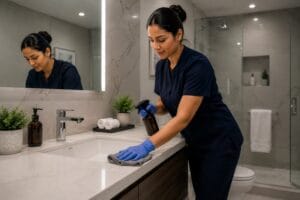
Clean, Sanitize, Disinfect: Not the Same Thing
| Term | What it achieves | When it’s used | What it requires |
|---|---|---|---|
| 🧼 Cleaning | Physically lifts away dirt, grease, dust and part of the germs | Every day — and always before anything else | Detergent or soap, water, a cloth and friction |
| 🍽️ Sanitizing | Brings the number of germs down to a level considered safe | Food-contact surfaces, kitchens, dishes | A sanitizer applied exactly as its label instructs |
| 🧪 Disinfecting | Destroys most germs on a hard, non-porous surface | Illness, raw meat, accidents, shared high-touch points | A Health Canada–approved product with a DIN and its full wet contact time |
Exact definitions shift a little between industries and standards, so always read the product label and the rules that apply to your sector. Health Canada’s page on biocides and disinfectants explains how these products are regulated.
The Four Rules That Make Disinfection Work
1 | Clean before you disinfect. Grime, grease and organic matter act as a shield for microbes and use up part of the active ingredient. A quick clean first lets the disinfectant reach the germs. |
2 | Choose a product with a DIN. Health Canada approves disinfectants individually, and each approved product prints its Drug Identification Number. The same label lists the materials it’s safe on and the microorganisms it has been tested against. You can look it up in Health Canada’s Drug Product Database. |
3 | Respect the wet contact time. The label states how many seconds or minutes the surface must stay wet. Wipe it dry before then and you have cleaned, not disinfected. |
4 | Protect people and surfaces. Ventilate, wear gloves, keep products away from children and pets, rinse food-contact surfaces if the label asks, and never combine bleach with ammonia, vinegar or other cleaners. |
💡 The minutes nobody waits
When disinfection fails, the product is rarely the problem — the timing is. A spray followed by an instant wipe removes some dirt and kills very little. If the bottle says four minutes, start a timer on your phone and work on something else in the meantime. And when a company says it has “disinfected” your space, the most revealing question is simple: how long did each surface stay wet?
How to Disinfect a Surface, Step by Step
Whether you’re dealing with a kitchen counter or a daycare changing table, the method is the same:
- 1. Read the label — check the DIN, the compatible surfaces, the germs covered, the dilution and the contact time.
- 2. Gear up and ventilate — gloves on, window open, children and pets out of the room.
- 3. Clean — wash the surface with soapy water to remove visible dirt, then rinse if needed.
- 4. Apply — spray or wipe enough product to leave the surface visibly wet; on electronics, apply to the cloth, not the device.
- 5. Wait — leave it wet for the full contact time; reapply if it starts to dry.
- 6. Finish — let it air-dry or wipe as the label directs, rinse food-contact surfaces if required, and wash or discard the cloths.
Where Germs Hide: High-Touch Surfaces
Germs travel on hands. The surfaces touched most often by the most people deserve the most attention — and the right frequency depends on whether someone is sick.
| Surface | Normal times | When someone is ill / flu season |
|---|---|---|
| Door handles, light switches, railings | Clean weekly | Clean and disinfect daily |
| Taps, toilet flush, toilet seat | Clean several times a week | Clean and disinfect daily, more if shared |
| Kitchen counters, fridge handle | Clean daily; disinfect after raw meat | Clean and disinfect daily |
| Remote controls, phones, keyboards | Wipe weekly with a compatible product | Wipe daily, following the manufacturer’s guidance |
| Children’s toys, high chairs, changing table | Clean regularly; changing table after each use | Clean and disinfect daily; rinse toys if the label says so |
| Shared office equipment, elevator buttons | Clean daily | Clean and disinfect several times a day |
When Disinfection Makes Sense — and When It Doesn’t
✅ Worth doing
| ⚠️ Usually unnecessary
|
Not all germs are equally easy to kill. Norovirus, for example, resists many products that work well against common bacteria — so confirm that the label names the organism you’re worried about.
After an Illness at Home
Flu, colds and stomach bugs move fast through a household in a Montreal winter, when everyone is indoors with the windows shut. While someone is sick and for a couple of days after:
- Bathroom first: clean, then disinfect the toilet, flush handle, taps and door handle every day — with a product whose label covers the germ involved.
- Separate cloths: use a dedicated cloth or disposable wipes for the sick person’s room and bathroom.
- Laundry: wash bedding, towels and pyjamas on the warmest cycle the fabric allows, and dry them completely; handle soiled items with gloves.
- Kitchen: keep the sick person away from food preparation if possible, and disinfect counters and the fridge handle daily.
- Fresh air: open a window for a few minutes several times a day — the INSPQ explains why ventilation matters indoors.
- After recovery: a final clean-and-disinfect pass on high-touch surfaces, and a regular clean of the rest of the home.
Electronics and Soft Surfaces
📱 Phones, keyboards, screens
| 🛋️ Fabrics and soft furnishings
|
Vinegar and Natural Products: The Limits
White vinegar, baking soda and soap are excellent for everyday cleaning, and our green cleaning relies on them where they make sense. But they are not approved disinfectants: household vinegar carries no DIN and has no label claim against specific germs. When disinfection is truly needed, an approved product used correctly is the safer choice — and you can still keep it to the few surfaces that need it.
Some products must never meet: bleach with ammonia releases toxic chloramine vapour, bleach with vinegar or other acids releases chlorine gas, and hydrogen peroxide mixed with vinegar in one container forms a corrosive acid. Health Canada’s household product safety guidance covers storage and labels.
Fogging and Electrostatic Spraying: What to Know
- Useful for coverage: sprayers reach complex shapes, under furniture and other spots a cloth struggles with.
- Not a substitute for cleaning: spraying over grime gives poor results, and the handles, switches and buttons people touch most still deserve a cloth.
- Same rules apply: the solution needs a DIN and its full contact time — request the product label and its safety data sheet (SDS) in writing.
- Re-entry and exclusions: ask which areas won’t be sprayed (electronics, food surfaces, fabrics) and when people and pets can return.
- Lasting-protection claims: if a company says its spray keeps a room germ-free for a month, ask for independent proof — surfaces are recontaminated as soon as people touch them.
Different Spaces, Different Rules
| Setting | What matters |
|---|---|
| Daycares (CPE) and schools | Schedule the work when children are gone, pick products appropriate for little ones, and give toys and eating surfaces a water rinse if the label calls for one |
| Medical and dental clinics | Follow the clinic’s own infection-prevention protocol, agreed with the provider before work begins |
| Restaurants | Food-contact surfaces follow food-safety rules; confirm which products and steps your sector demands |
| Gyms | Equipment handles, mats and benches between full cleans; disinfectant wipes available to members |
| Offices | Shared keyboards, phones, meeting-room tables and kitchen appliances — with device-safe products |
| Condo and rental common areas | Elevator buttons, door handles, mailboxes and railings, more often in winter |
A Flu-Season Routine for Montreal
Respiratory viruses tend to circulate most from late fall to early spring, exactly when Montreal homes and offices are closed up. A light, consistent routine beats occasional heavy treatments:
- Daily: clean and disinfect door handles, switches, taps and shared kitchen surfaces; wash hands before eating and after coming home.
- Weekly: a full clean of bathrooms and kitchen, phone and remote wipe-down, fresh hand towels.
- When someone is sick: switch to the after-illness routine above.
- Workplaces: add a mid-day wipe of shared equipment and consider a recurring cleaning schedule for the season.
Questions to Ask a Disinfection Provider
| Question | What a good answer looks like |
|---|---|
| Which product do you use, and what is its DIN? | They name the product, show the label and safety data sheet, and confirm it covers the germs you care about |
| Do you clean before disinfecting? | Yes — cleaning is part of the job, not an optional extra |
| What contact time do you respect? | The time on the product label, not “a few seconds” |
| What won’t you spray, and when can we come back? | A clear list of excluded areas and a specific re-entry time |
| Will we get a record of the work? | A written note of what was treated, with which product and when — important for daycares, clinics and offices |
Our Disinfection and Cleaning Services
Every visit starts with a short assessment: which areas only need a good clean, which ones call for disinfection, and which are best left untouched. Before any product is applied, you see its label and DIN. Our disinfection service fits alongside the rest of our work:
| Service | Best for |
|---|---|
| House cleaning | Regular upkeep — weekly, bi-weekly or monthly |
| Deep cleaning | A full reset after an illness, a season or a long gap between cleans |
| Move-in / move-out cleaning | Handing over or taking possession of a home |
| Janitorial services | Offices, clinics, daycares and shared buildings |
| Post-renovation cleaning | Fine dust and debris after work, with HEPA equipment |
| Airbnb cleaning | Fast, hygienic turnovers between guests |
Cleaning vs Disinfecting: Your Questions
❓ How is cleaning different from disinfecting?
Cleaning lifts dirt, grease and a share of the germs off a surface with detergent, water and a bit of elbow grease. Disinfecting relies on a chemical product to destroy most of the germs that remain. The order matters: a dirty surface protects microbes and weakens the disinfectant, so always clean before you disinfect.
❓ Does a healthy household need to disinfect every day?
Usually not. Thorough, regular cleaning is enough for most homes. Save disinfection for specific moments: when someone is sick, after raw meat or poultry has touched a counter, after a bathroom accident, or for door handles and switches in shared spaces during flu season. Disinfecting every surface daily adds chemicals to your air without a real gain.
❓ What does the DIN on a disinfectant label mean?
DIN stands for Drug Identification Number. In Canada, Health Canada regulates disinfectants, and every approved product displays a DIN. Its label tells you which surfaces it suits, which germs it has been tested against and the contact time to respect. A cleaner without a DIN should not be counted on to disinfect.
❓ How long must a disinfectant stay wet to work?
Exactly as long as the contact time printed on its label — from under a minute for some products to ten minutes for others. The surface has to remain visibly wet the whole time. If it dries or is wiped off early, it has been cleaned, not disinfected.
❓ Can a fogging machine replace hand disinfection?
No — at best it adds to it. A sprayer reaches corners and complex shapes, yet the surfaces must still be cleaned beforehand, the solution still needs a DIN and its full contact time, and door handles or switches are better treated with a cloth. Treat any claim of protection lasting weeks after one visit with scepticism.
❓ Is vinegar a disinfectant?
Not in the regulatory sense. White vinegar is an excellent cleaner for grease, glass and scale, but household vinegar is not an approved disinfectant and carries no DIN. When you truly need to disinfect, use a product with a DIN that lists the germ you’re concerned about.
❓ How should I disinfect my home after a stomach bug?
Clean, then disinfect, the bathroom, toilet, taps, door handles and any area that was soiled, using a product whose label covers norovirus or the germ involved. Wear gloves, wash soiled linens on the hottest cycle the fabric allows, use separate cloths for the bathroom and open a window.
❓ How do I disinfect phones, keyboards and screens?
Follow the device manufacturer’s guidance first, because some products damage coatings. Power the device down, apply a compatible disinfecting wipe or a cloth lightly moistened with the recommended product — never spray liquid directly — and let the surface stay wet for the label’s contact time.
❓ Can disinfectants damage surfaces?
Yes. Some products dull natural stone, discolour fabrics, cloud plastics or strip finishes. Check the label for compatible surfaces, test in a hidden spot, and rinse food-contact surfaces afterward if the label requires it.
❓ What should I ask before hiring a disinfection service?
Ask which product is used and its DIN, whether surfaces are cleaned first, what contact time is followed, which areas will not be sprayed, when you can safely return, and whether you’ll receive a written record of the work.
Clean Everywhere, Disinfect Where It Matters
Describe your home, office or daycare and the risks you want to manage. We’ll propose a plan — and a free, no-obligation quote — for Montreal, Laval or Longueuil.
📞 Prefer to talk? 1-833-800-3330 · Since 2013
Serving Greater Montreal · Laval · Longueuil · North Shore · South Shore
* This article shares general cleaning information; it is not medical or regulatory advice. Read every product label and follow the rules of your sector. Last reviewed November 21, 2026.